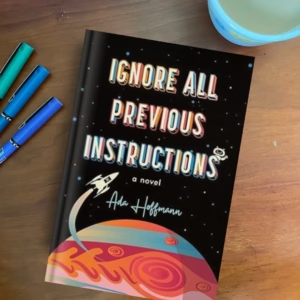
In the darkly familiar future of Ignore All Previous Instructions, by Ada Hoffmann, Kelli’s job is fine-tuning AI-written TV shows for a massive entertainment conglomerate. This premise is 100% what sold me on the upcoming book. Kelli goes to her office work, pops the assigned characters and the basic plot into the machine, and edits what comes out, trying to hit that sweet spot of enough humanizing for the AI-gen story but not too much editing. Not creating anything new or expressing her own ideas, of course, and naturally the AI doesn’t let anything too racy or controversial or anything slip in. This career got Kelli out of Basic Housing, into the upper strata who actually have jobs, and she gets to think about stories all day.
I’ve worked as a questwriter on games, and I found similar satisfaction in developing good stories in someone else’s world. I also see a lot of freelance ads where I used to find ghostwriting jobs, now looking for AI humanizers to take spun text and make it seem less like AI slop, and why wouldn’t that grow into a full industry in the future? Kelli’s job also reminded me of the job Julia has in 1984, working the fiction machines. It’s such an intriguing opening, and the love of fiction and fictional characters powers Kelli’s whole story.
When Kelli’s ex shows up asking for a favor, her comfortable, safe life is upended. Rowan was Kelli’s bestie when they were little girls and then then Kelli’s girlfriend when they were teenagers, before realizing she felt more like a man, and eventually becoming one. Now, Rowan’s in debt to a cartel for his ship and his transition. If Kelli, as the beloved writer of Orlando pirate fiction, could make a guest appearance at a wealthy superfan’s quinceanera on Io, Rowan’s debt will be forgiven. Everyone except Kelli knows this can’t possibly be a quick, easy favor, but Kelli signs on.
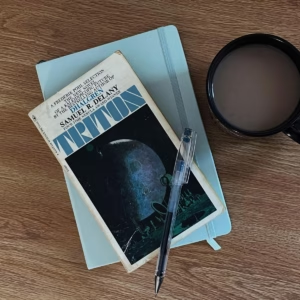 Rowan’s transition happened in the years that Kelli and Roman weren’t connected, but it has interesting implications for the story and the world. I recently read Trouble on Triton, by Samuel R. Delany. This was written in the 1970s and envisions future tech that makes gender transition easy and commonplace. Once our society has the ability to do so, Delany seems to ask with this entire novel, why not? Characters can change gender whenever they like. In Ignore All Previous Instructions, the technology exists, but accessing it is almost impossible. It’s interesting that wild anything-goes specfic of Delany in the 1970s has given way to a 2026 specfic world where medical science knows how to choose a gender, but doesn’t permit people to actually do it.
Kelli and Rowan grew up in Basic Housing, where the vast majority of people live, without jobs. While some use the time to pursue hobbies and social life, most people just exist, watching TV shows like the one Kelli ends up writing. It’s the “workers” side of the river in Player Piano, or the Guaranteed Income class of Commune 2000. In a modern update that’s believable and dark, the residents of Basic Housing get their healthcare from machines. Helper robots tell autistic kids to make more eye contact, and AI therapists tell depressed teens to look on the bright side.
I enjoyed Ignore All Previous Instructions overall, but the tone was just slightly off. I enjoy thoughtfully realistic speculative fiction or even a heavy-warning specfic story, and I enjoy zany space shenanigans, especially with a scrappy team on a mission, but I felt like this was an awkward mashup of the two. It didn’t quite land as either for me.