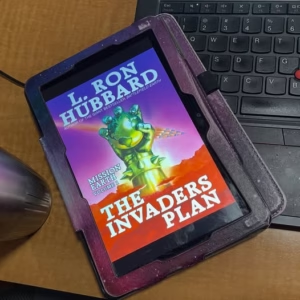
 Mission Earth: The Invaders Plan is the first book of what would become L. Ron Hubbard’s 10-book Mission Earth series. This is a famous, satirical sci-fi epic that imagines Earth under covert alien control.
There’s a fun framing device that explains the book is written long after these events. It’s sort of a confession from someone in jail for these crimes… but also someone who’s revealed to be pretty dishonest and sneaky, and the whole intro gives an unreliable vibe. I thought that was intriguing, and plus I’m reminded of the “historical documents” in Galaxy Quest.
The story follows Jettero Heller, from the Voltar Confederacy, who comes to Earth and finds a world that’s familiar to us, with corruption, pollution, and confusion all around. See, the evil aliens want to destroy Earth, after exploiting it for resources, but they can’t because humans are trashing the Earth much faster. There’s sharp satire and the narrative mocks all different organizations. This is an ideas-driven book, not really focused on characters or relationships. A lot of Mission Earth: The Invaders Plan satirizes at social systems as an alien outsider. Outsiders see the disorganization and corruption in different systems, and the author uses this to make sharp and snarky commentary. This is the best part — I thought this book was more about the mood and worldview than discovering the events. The framing device, explaining to readers that these are historical documents, not a novel, adds to the realism, and lets us know the scope from the start.
Overall, I found The Invaders Plan ambitious and creative, with clever satire and an epic scale, but it also dragged in some info-dumping sections. I know, I know, this is a fairly long novel that’s only 1/10th of the whole story, so I shouldn’t be surprised that it’s long and info-heavy. Recently, I’ve been reading a lot of short scifi, so I think I was waiting for the twist or the reveal, while the book was offering me details and explanations, hinting at connections and conspiracy, and mocking different groups.
This is an interesting epic satire, as the narrative mocks customs and social systems, and there are very funny parts. At the same time, the book requires commitment from readers, it’s not a fast read.