This is a sponsored post on behalf of Review Wire Media for Trafalgar Releasing.
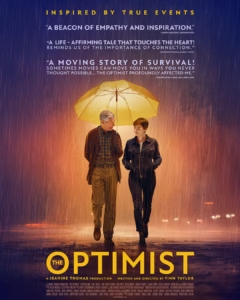 The upcoming movie The Optimist is based on a true story. Inspired by the life of Holocaust survivor Herbert Heller, the film explores how sharing one’s story—even after decades of silence—can open the door to healing. As a teenager, Herbert escaped the Auschwitz-Birkenau death march, but even though he survived, he didn’t discuss what had happened to him. He carried that trauma secretly for most of his life. When he finally chooses to speak, his honesty sparks an unexpected friendship with Abby, a troubled teen navigating her own pain. The movie tells offers a gentle, life-affirming reminder of how powerful it can be to truly listen to someone else’s story, and to be heard and seen.
The Optimist is directed by Finn Taylor and produced by Jeanine Thomas, and it’s the result of years of work. The film project was shaped over more than ten years, beginning when Thomas first met Heller. The film stars Stephen Lang and Elsie Fisher as the leads. The Optimist will open nationwide on March 11, 2026, distributed by Trafalgar Releasing. We have some showings here in Boston. JewishBoston.com says:
“The Optimist” chronicles the true story of Holocaust survivor Herbert Heller (Stephen Lang), who kept his unbelievable escape from the Auschwitz-Birkenau death march a secret for 60 years. Heller was a teenager himself when he fled, and he reveals his past to Abby (Elsie Fisher), an alienated teenager who inspires him to open up and finally heal. The two outsiders form a strong bond: As Abby shares more pain, Heller offers a useful perspective: This isn’t the end of the world. I’ve seen the end of the world. I had a ringside seat.
There’s also a 20-page discussion guide to go with the movie. You can get The Optimist Discussion Guide here. I particularly liked one sections about teenagers and adults:
SECTION 4: Intergenerational Wisdom & Mentorship
Facilitator Note:
Teens often feel misunderstood by adults. This section opens up reflection on what healthy
adult-teen relationships can look like.
Mental Health Insight:
Older mentors can offer perspective, experience, and validation—but the key is mutual respect,
not control.
Discussion Questions:
1. Have you ever felt like an adult really understood you? What made that possible?
2. What can teens and adults learn from each other about mental health and resilience?
3. If you could ask an older person one honest question, what would it be?
This is a sponsored post on behalf of Review Wire Media for Trafalgar Releasing.