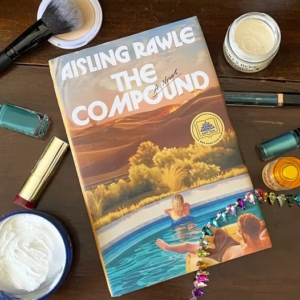
 The Compound, by Aisling Rawle, is a page-turning reality show drama, with intriguing commentary on transactional relationships and social performance in 24/7 exposure.
Lily wakes up in the compound, which means she’s been picked for an unnamed future reality show. One of the rules of the show is never talking about the show, or about the contestants’ lives outside the show, so the beginning of the novel has a dreamlike quality, as beautiful young women wake up around the compound, swim in the beautiful pool, and ask each other when the men will arrive.
For the show, ten women and ten men will live in the compound and be filmed constantly. They can complete Communal Tasks to earn rewards for the house, beginning with furniture and food, and moving up to luxuries. They can also complete secret Personal Tasks for private rewards. These tasks range from silly reality-show staples to voting off a resident, some dangerous tasks and some for public humiliation. All residents need a bedmate of the opposite gender — anyone who wakes up alone is dismissed from the compound and the show. The last person in the compound is the winner, and they win basically anything and everything they can dream up.
 Lily seems unambitious at first, a pretty girl going on a reality show to get some brand deals and be seen, but really, she’s here to win. She’s watched the previous seasons and knows what to do, whether that’s flirting with the right boy to get someone safe into her bed, thanking a brand sponsor with the right enthusiasm, or chatting about the products she likes so brands and producers will offer her the upscale clothes and beauty accessories she wants. She doesn’t say directly that she’s not here to make friends, or that she’s in it to win it, or anything like that, but it becomes clear that Lily doesn’t have anything on the outside.
The show and the contestants are all powered by greed, but the story isn’t leading to an obvious moral about whether money equals happiness. For Lily, the show will lift her out of drudgery. In her regular life, she works a makeup counter, so she sees luxury products, but never has enough money for them, and describes how she often has plans for her day off, but ultimately spends any free time recovering from the exhaustion of her job. For the men, the prospect of fighting in the unnamed wars looms. And after the men’s nights in the desert or everyone’s time in the compound without food or a front door, can readers even blame them for wanting nice things?
The obsession of a slightly dangerous reality show makes fascinating reading. Lily’s not the only one determined to win, and the escalating challenges and shifting alliances increase the book’s tension. It’s a frothy page-turner, but points to disturbing truths.
Lily says a few times that she’s not intelligent, but she slowly realizes that the invisible producers pick the challenges, so there’s an invisible forces choosing who wins. A running race to favor those with physical strength, or a math challenge right after she’s admitted her basic arithmetic errors almost cost her job.
The Compound shows the shallowness of the contestants and the fake-natural performance of being on the show, which feels like a natural progression of reality shows and influencer culture, but the book’s not mocking the characters for taking advantage of the system. Sitting in the sun talking about stylish linen dresses and waiting for a brand to send one is shallow and fake, but much nicer day than one spent working a dead-end job. The quest for a bedmate every night feels like a comment on dating desperation, especially after the appearance ranking and the desperation to grab a partner when the gender numbers are off. This book works a fun page-turner as contestants are pushed to do wilder things for wilder prizes, and also as a comment on performance.