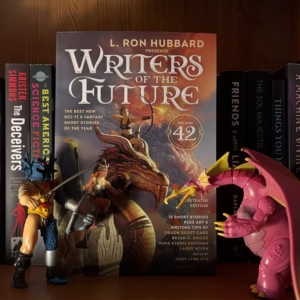
I always look forward to the Writers of the Future collection, every year there are great new scifi / fantasy authors to discover.
Last year, I thought the collection’s theme was AI, but wasn’t that kind of the theme of life in 2025? This year, for Writers of the Future 42, I thought the common thread was about replicas and reality: artificial versions of real things, fakeouts, lies, and twists. Scifi shorts are a great medium for a twist ending or surprise reveal, and I think this overall theme reflects our current world of deepfakes and post-truth news.
I enjoyed The Triceratops Effect, by S.J. Stevenson. This one had a lot of pulpy fun with time travel and dinosaurs, but twisted the usual plot about preserving the timeline. Recommended for fans of The Domesday Book, by Connie Willis, for a page-turning visit to a fascinating other time, and for readers of 3 Days, 9 Months, 27 Years, a short story by John Scalzi, for spoiler-rific reasons.
There’s a sort of virtual romance in As Long as You Both Shall Live. A beautiful girl dies while beta-testing a virtual environment, but her personality is preserved in the virtual world, where her coworker can visit her, and find ways to spend more time with the woman he loves. I was reminded of stories like Robert Silverberg’s The Pleasure of Their Company. But As Long as You Both Shall Live isn’t an AI story as much as it’s about relationships.
I’m noticing right now that another repeating theme in this year’s collection is unreliable employers, whether that shows up as a beta test that kills someone, a false king demanding tribute, or just troublesome supervisors.
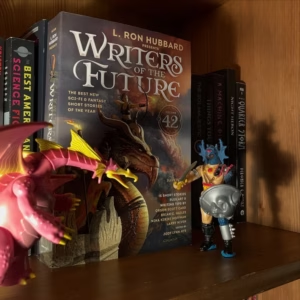 This one’s definitely not a new author, but I enjoyed the awkwardly-named Skinny-Shins, by Orson Scott Card. This story felt like a double joke, a long roundabout explanation of how one could reasonably get the bikini babes and dragons of typical fantasy art together, and then another joke about putting the real truth of aliens into fiction so no one will believe it. A fun read for SFF readers, and it matches this year’s overall theme of things not being what they seem.
Almost skipped Thickly, by Dorothy de Kok, because it’s described as body horror, and nope, I do not like anything yucky in my fiction. In this one, a new pill will give women a better, more beautiful shape. Women in a South African town start taking these little pills, and almost instantly, they’re becoming a little more rounded, a little sexier and more beautiful. Something horrible happens in this short story, but it’s not described in a gruesome or gory way, so it’s readable for me. I don’t want to reveal too much, because it’s the kind of story where you have to discover the horrors along with the main character, but I will tell you it’s not gross or hard to read. Thickly brings to mind Ozempic fears and Doctor Who‘s Adipose Industries, although these beauty pills will help put on more weight, in all the right places, not help lose it. (Because there’s actually no body shape for women that’s free of criticism, is there?)
A lot of the retro sci-fi I’ve been reading recently is about the threats of that time, like nuclear war or out-of-control science in general. It’s interesting to me that prize-winning new authors of Writers of the Future 42 are telling stories about hidden identity and separating the real from the deepfake or construct. Our current concern isn’t an atomic bomb, it’s about discovering things are not what they seem, and trustworthy people turn out not to be.